
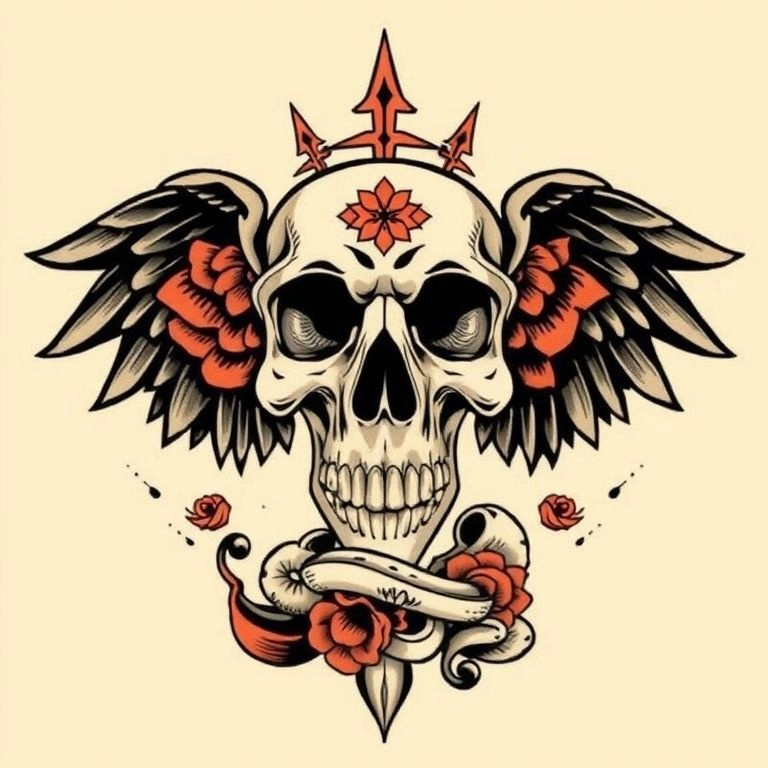
Can You Cover Up an Old Tattoo: Examples and Advice
The art of cover-up: how to give a failed or boring design a second life.
The Essence and Limitations of Cover-up
Tattoo cover-up is the process of applying a new, denser design over an old one. It is completely achievable and is a common service. However, it is important to understand: it is always a compromise.
The main rule: The new tattoo must be larger, darker, and denser than the old one. You cannot cover a solid black square with a delicate pink flower. The new design must cleverly use or camouflage the dark outlines of the previous work.
Factors Affecting Cover-up Success
- Lightness of the old tattoo: The lighter and paler the old tattoo is, the easier it is to cover and the more freedom the artist has in choosing the design.
- Color of the old tattoo: Black and dark blue are the most difficult. Lighter colors (e.g., light blue, green, yellow) are easier to cover.
- Density of the outlines: If the old tattoo consists of thick, bold outlines, the artist will have to either incorporate these lines into the new design (e.g., in the shading) or darken them as much as possible.
- Size: The new tattoo must be at least 30–50% larger to provide space for camouflaging the old elements.
Styles Best Suited for Cover-up
Not all styles are effective for cover-ups. Artists most often use the following approaches because they allow for high color density and shading:
- Blackwork and Tribal: Ideal for cover-ups as they use solid black fill that completely masks the old pigment.
- New School: Thanks to bright colors, thick outlines, and dense color packing, this style allows for effective covering of even dark tattoos.
- Realism (in dark tones): Images of animals or skulls, where a lot of dense shading and deep black color can be used, are often successfully applied for camouflage.
- Japanese Style (Irezumi): Due to the use of a dense background (waves, clouds, smoke) which is perfect for masking old elements.
Preparation for Cover-up: Laser is Your Best Friend
If your old tattoo is very dark, dense, or poorly positioned, the artist may recommend 1–3 sessions of laser removal.
Why is the laser needed? The laser does not necessarily have to completely remove the tattoo. Its job is to make the old pigment as pale and blurry as possible. This gives the artist:
- More freedom in choosing the color (lighter tones can be used).
- The possibility of making a smaller cover-up.
- The ability to use softer styles than solid black.